Troublesome China Bashing
U.S. foreign policies are not developed from facts and reality; they are developed from made-up stories that fit agendas.
Why Can't the United States and the G7 Even Utter the Word Ceasefire'?
A Chinese editorial
Only when all conflicting parties immediately cease all hostile activities can genuine peace talks and humanitarian relief efforts unfold.
The Division of Ukraine
Using force to halt what Russia perceives as a counter-offensive to NATO advances is a never-ending pursuit.
Postscript to Treason
Because the boastful and mercurial Prigozhin surrendered, while supposedly leading a powerful force, it can be assumed he became aware he was about to face a more powerful force and could not win.
The Bizarre Episode of Yevgeny Prigozhin
More complete information on the Yevgeny Prigozhin episode is now available and reports of the event still do not “add up.” What we are told cannot be what exactly occurred.
Purposely Misunderstanding Democratic Peoples Republic of Korea
Keep it sweet and simple, let the Koreans settle their problems, and we will see doves flying over the Korean peninsula.
The U.S. Will Assure Taiwan Joins the Peoples Republic of China
News reports have a predatory China trying to take advantage of every opportunity to pounce upon Taiwan and forcibly annex the Island to the PRC. History does not validate that hypothesis.
China Disguised
Agendas, exaggerations, and misrepresentations guide media reports of the Peoples Republic of China (PRC). Analysis of reports exposes the distortions.
Ukraine War Shifts to Economic Warfare
Escalating economic warfares, in which the Russian military pounds economic targets and NATO sanctions pound the Russian economy, have become the decisive and deciding strategies of the war.
Ukraine – Sacrificial Lamb
The final outcome of U.S. diplomacy in resolving Ukraine’s crisis will have Ukrainians dead and their country demolished in trade for weakening Russia economically.
Wandering 40 Years in Afghanistan's Desert
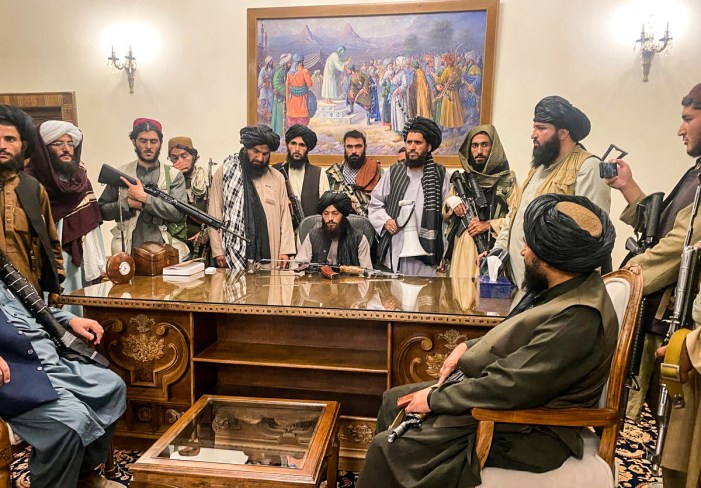 Image courtesy of Transnational Foundation Lund Sweden Image courtesy of Transnational Foundation Lund Sweden
Assumption that the Taliban can, by itself, effectively govern a nation divided by conflicting tribal loyalties and a partially reconstituted population, with a sharply contrary mindset, needs more validation.
Does Capitalism Mean War?
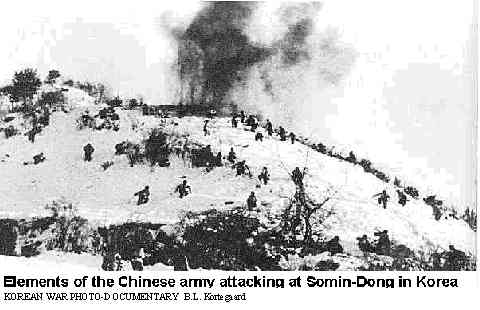
Chinese troops attaack in Korea War
Add to the mix, the economic
warfare that has decimated
populations, and the question
"Does Capitalism Mean War?"
leans to a positive answer.
|
Campus Free Speech
Skewing the Debate
The impact of the protests propelled pro-Israel groups to skew the debate from the U.S. support of genocide of the Palestinian people to campus activity of anti-Semitism.
Battle for the Minds
The Religious Politic and the New Atheists
Do Americans Have a Genocide Gene?
The United States has been party to several genocides, involved in mass killings of civilians, and supports Israel’s destruction of the Palestinians.
Beware of Economic Textbooks
Students learn economics from unverified theories, many contradicting each other, which leads to confused understandings of the discipline and complicated approaches to resolve problems.
Saving Social Security
A National Pension Plan Revisited
Only a National Pension Plan can provide a suitable and secure financial arrangement for retirees.
Trump's Lesser Economy

When a multitude of factors, rather than a few handpicked factors, are considered, during Trump's term in office, U.S. economic progress has been meager, and China’s economic power might have eclipsed that
of the United States.
Democratic Socialism Will Soon Replace Capitalism

Image courtesy of
understandingrelationships.com/
Capitalism will slowly evolve into a Democratic Socialist system that will
be able to provide the structures for maintaining democratic substance
and resolving the challenges of a
difficult future.
Democratic Socialism Can Prevent
the Catastrophe
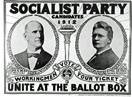
"Better Pink than Sink," is the new slogan for the Democratic and Socialist communities, pushed to leadership in order to prevent Capitalism's latest offering
-- human extinction.
Demystifying the Mystery
of Debt

image courtesy of Motley Fool
Providing answers to a few questions enables improved understanding of debt, of how it shapes the economic system, and the magnitude of its perceived problem.
Is the Keynes Investment Multiplier Actually a Divider?
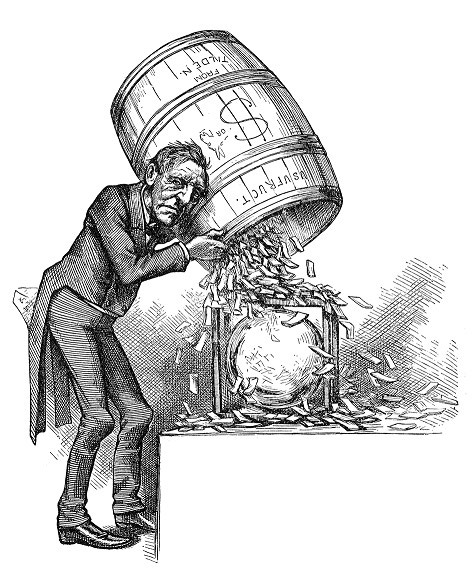
A careful and complete examination
of Keynes' investment multiplier
and the contradictions concerning it
is required. If analysts cannot refute the presented arguments, then the "multiplier's" significance may have
to be re-evaluated.
Whom Did Tax Reform
Benefit?

Image courtesy of http://www.cfma.org
Characterizations of the Tax Cuts
and Jobs Act have followed
agendas – its opponents
maintaining it is a bill for the
wealthy, and its supporters arguing that the bill fairly satisfies all economic levels.
Whom Did Tax Reform Benefit?
|
Talking Points articles at
MECrisis-Talking Points
|
Biden and Trump
Asked which of two American candidates for president would win the presidential election in Pakistan, former Pakistan President Pervez Musharraf responded, “They both would lose.”
The Democratic Party’s Big Mistake - Support for Israel
By improperly attending to the urgent situation in Gaza, the Democratic Party may lose sufficient voters to jeopardize its commanding position in national governance.
America is Now Democratic Socialist
Failure of Neoliberal Free Enterprise
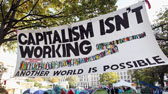
Image courtesy of Market Watch
As of March 2020, the United States is operating as a more than strict Democratic Socialist system,
regulating aspects of American life. Disappointing that Democratic Socialists failed to capitalize on this historical moment, which shows a desperate need for Democratic Socialism.
The New Politics of Starvation
An Updated Survey

Image courtesy of The Onion
President Donald Trump's use of
the most vicious aspects of economic warfare prompt another examination of the politics of starvation.
|
July 4 and Declaration of Independence
The Declaration of Independence contains inspiring words but it was not initially prepared for that purpose. To have other governments assist them, the revolutionists had to organize themselves as an independent nation.
PBS Spurious Narrative of America and the Holocaust
The documentary emerges as another narrative on the World War II Holocaust, with a calculated intent of using spurious information to link the American people and their administration to the catastrophe. Why was this necessary? What was the reason? Did the PBS producers pursue a hidden agenda?
Sievierodonetsk- Deciphering News of the War in Ukraine
Obtaining credible reports of the war in Ukraine requires shuffling through several accounts and piecing them together to make a logical analysis.
Debasement of America
Expansion of knowledge sources and ease of access have brought familiarity with an overload of content without ability to authenticate, successfully analyze, and capably use the content. Sources are controlled, access is subtly directed, and content is deliberately shaped. The knowledge revolution has manufactured the debasement of America
Illogical Thinking Leading to Illogical Actions
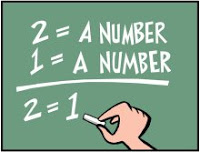
image courtesy of Greater Manchester Skeptics
Preventing the assault on America’s capitol was not exclusively a policing failure; the twisted behavior culminated from inadequate response to Trump and his supporters’ unsubstantiated attacks
on the validity of the 2020 election.
The Film Knives Out
What You See Cannot be What is

Knives Out’s twists are conveniently manufactured to engineer a twisting plot. Combine these failures with errors in the film narrative and Knives Out does not satisfy The film can be rescued if what we think we see is not what is actually happening; maybe there is another explanation to “who dunnit.”
|